There is no item in your cart

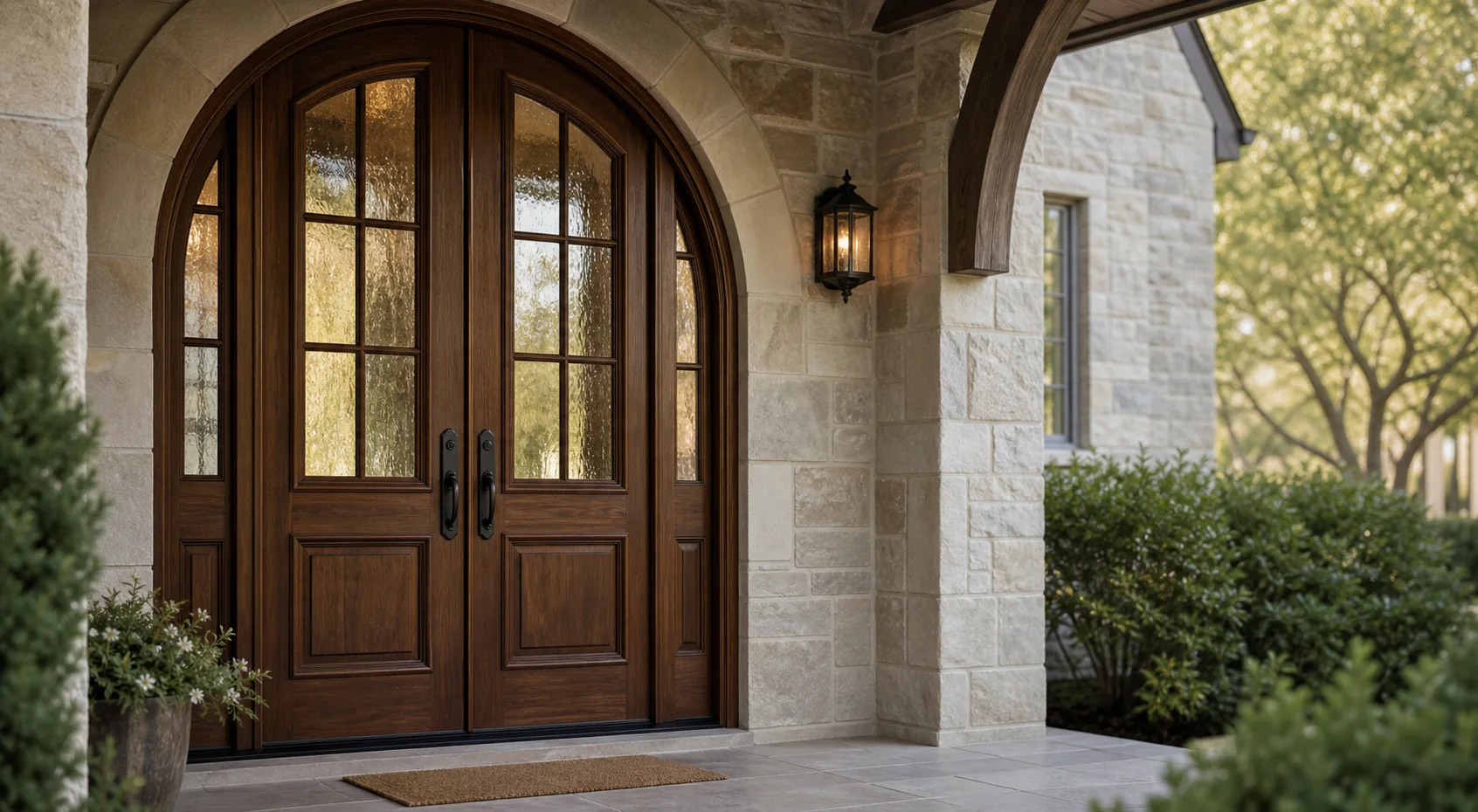
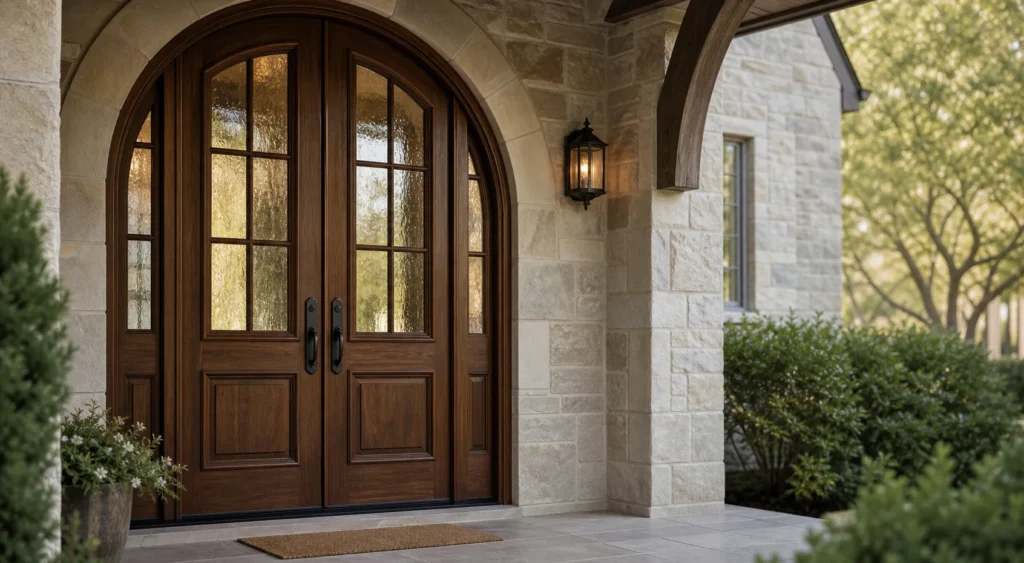
Arched french doors combine an elegant paired entrance with a distinctive curved head architecture. They create a dramatic architectural focal point because the curving top line and central meeting stiles must read as one cohesive unit. Whether installed as exterior entrance doors or interior room dividers, designing custom arched french doors requires carefully planning geometry, panel proportions, and glazing specifications before manufacturing begins.
Understanding Arch Geometry in Arched French Doors
When selecting arched french doors for your home, the first consideration is how the curve is shared across the double door frame. You can choose individual arch-top door leaves that meet at a center peak, a continuous curved head transom over rectangular door leaves, or a full radius arched frame enclosure. Record precise measurements of the spring line (where the curve begins), maximum center height, and opening width. Using a square reference frame helps identify structural settling or irregularities across wider openings before crafting custom jambs.
Standard arches include semi-circular (round) arches, segmental arches with a softer curve, and Gothic point arches. Each architectural style requires specific frame rebates and glass templates to ensure proper sealing against wind and rain while framing scenic outdoor views.
Active Leaf Operation and Hardware Details for Arched French Doors
Functionality is essential when customizing arched french doors. Determine which leaf will serve as the primary active door for daily passage and how the inactive leaf locks securely with flush bolts or multi-point locking systems. Adequate timber width must be allowed for mortise locks, handles, and heavy-duty hinges. Additionally, glass muntins and panel divisions should align seamlessly across the center meeting line so that both closed and open positions maintain visual balance.
When reviewing technical elevation drawings, consider both the closed entrance presentation and the fully open door position. Clearance for interior window treatments, hardware projection, and adjacent wall sconces must be verified so the doors swing smoothly without obstruction.
Before finalizing your architectural order, consult our comprehensive arched door measurement guide and explore our single vs double doors comparison to determine the ideal entrance configuration for your entryway.
Glazing and Frame Divisions for Arched French Doors
Glass selection plays a major role in the aesthetic and thermal performance of exterior arched french doors. Double-glazed insulated glass units (IGUs), low-E coatings, and tempered safety glass protect against weather while preserving natural interior light. To learn more about architectural glass standards and historic double-leaf entry door construction, see Wikipedia’s article on French doors. Aligning decorative glass panels with timber stiles enhances structural stability and long-term durability.
Exploring Door Collections and Custom Quotes
Browse our extensive hardwood door collection and view specialized designs in our arched door catalog. If you are comparing solid wood craftsmanship with decorative glass panels, inspect our popular arched double door with decorative glass. When you are ready to bring your design vision to life, send your specifications through our custom door quote page to receive a detailed estimate tailored to your exact entryway dimensions.
Material Selection and Weathering Performance
Choosing premium exterior hardwoods like Mahogany, Teak, or White Oak ensures structural longevity for arched french doors subjected to direct sun exposure and humidity changes. Kiln-dried timber prevents warping or binding along the top curved arch jamb. Pair your timber choice with high-grade exterior stains or marine polyurethane sealants to preserve rich wood grain patterns and maintain dimensional stability across seasonal temperature shifts.
Long-Term Maintenance and Installation of Arched French Doors
Because the top arch of arched french doors is shared by two operating leaves, subtle structural settling or seasonal wood expansion can affect door alignment over time. High-quality weatherstripping, heavy-duty ball-bearing hinges, and multi-point locking mechanisms ensure weather-tight seals and effortless door operation. Regular inspection of timber sealants and top jamb clearance prevents moisture penetration and maintains smooth latching.
Professional installation by experienced timber door specialists guarantees proper frame alignment, correct hinge mortising, and complete draft exclusion. Proper site preparation ensures your custom entry investment delivers lasting security, thermal insulation, and timeless beauty for decades.