There is no item in your cart


Wood front doors bring natural grain, depth and a sense of permanence to an entrance. They can be shaped into clean modern panels, traditional framed compositions, rustic surfaces or detailed carving. The material is expressive, but it is not maintenance-free, and selecting quality wood front doors depends on more than just a species name.
A sound decision considers how the leaf is constructed, where the entrance is exposed, how glass and hardware interrupt the timber, which finish system is proposed and who will install and maintain the unit. These questions help distinguish well-crafted wood front doors from an option selected only for its photograph.
Choosing the Right Wood Front Doors for Your Home
Ask the supplier to describe the construction, not only the visible timber. Confirm the species or material combination, leaf thickness, frame construction, panel arrangement, edge treatment and what is included with the unit. Natural variation in colour and grain is part of real wood, so samples and reference images should be treated as guides rather than promises of an identical pattern.
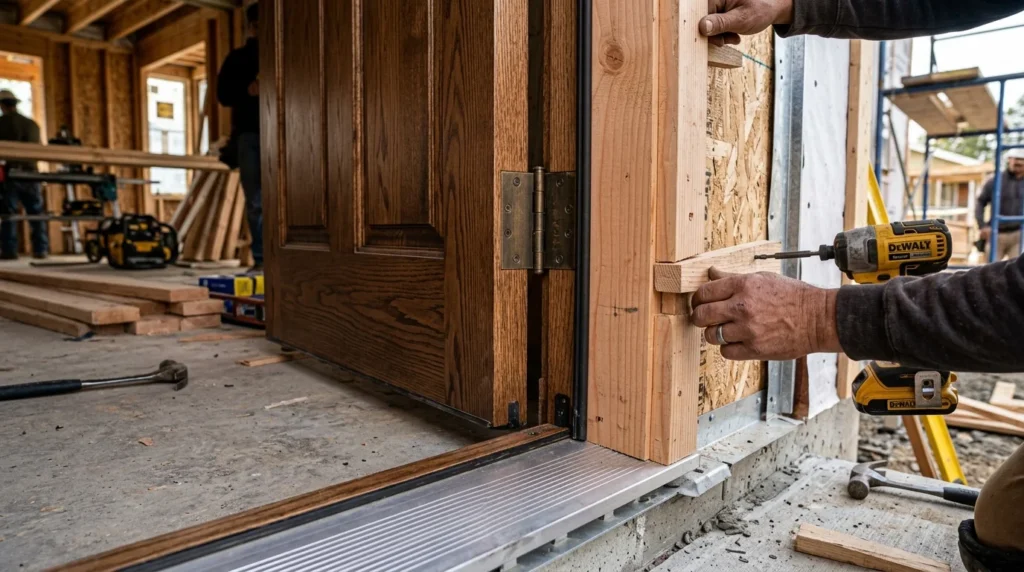
Solid wood can carry deep profiles and carving, while other engineered hardwood constructions may be chosen for different stability, cost or finishing reasons. To understand standard structural mechanisms, explore the Wikipedia door construction guide. For made-to-order projects, explore our door collections or read our solid wood door guide for trade-off details.
Popular Timber Species for Wood Front Doors
The choice of species directly impacts the durability and grain presentation of custom wood front doors:
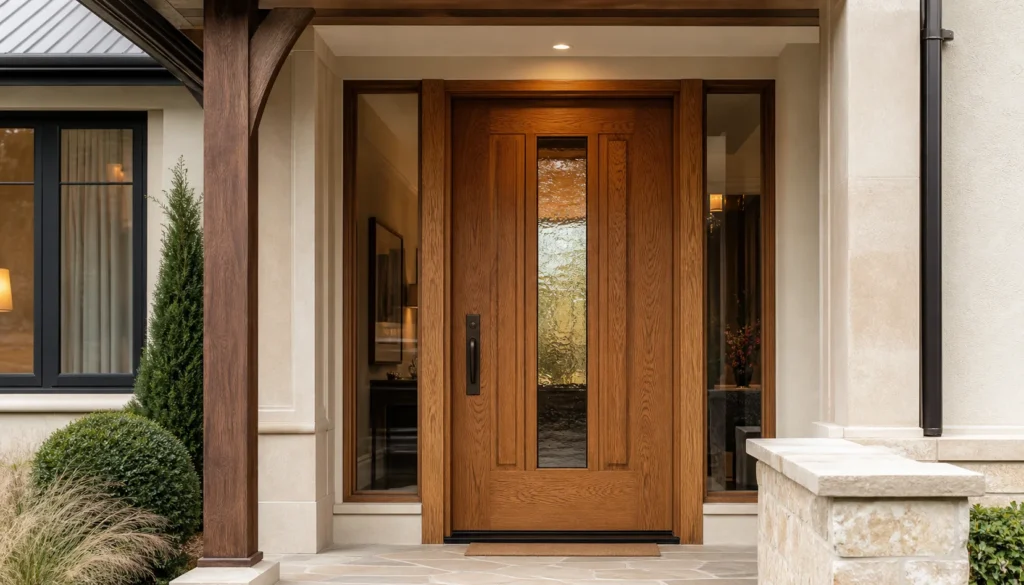
- Solid Oak: Offers prominent grain character, heavy density, and exceptional weather resistance when paired with high-performance clear coats.
- Mahogany and Teak: Dense hardwoods containing natural protective oils ideal for high-moisture exterior environments.
- Engineered Hardwood: Combines dimensional stability across fluctuating seasonal temperatures with authentic solid timber facings.

Glass and Style Options for Custom Wood Front Doors
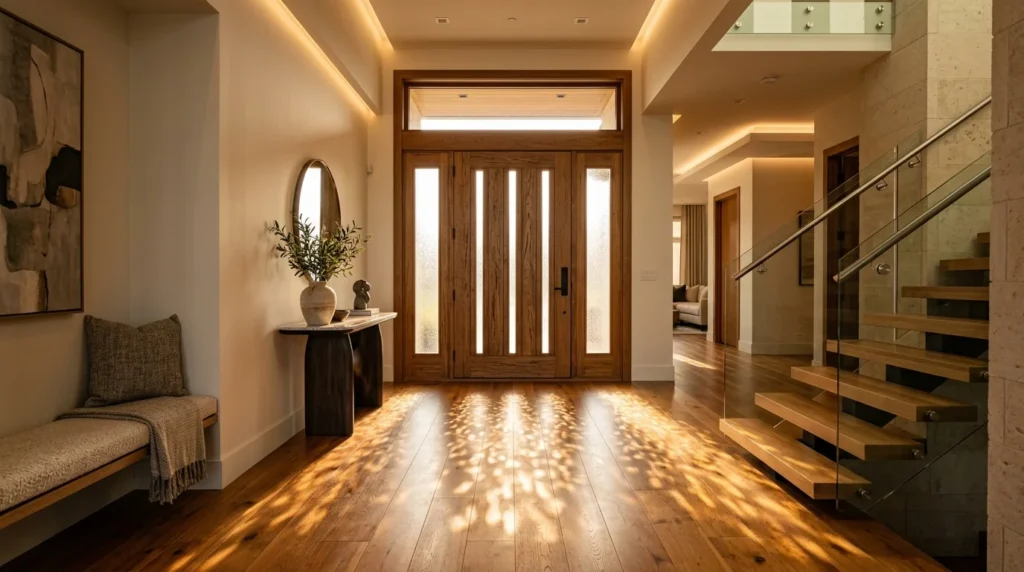
Glass can lighten the visual weight of timber and introduce daylight, but its position controls privacy and proportion. A narrow vertical insert creates a different character from an oval feature, multiple lites or a full glazed surround. Review the room behind the entrance, sightlines from the street and the balance between glass and solid timber before choosing a pattern.
For focused guidance, see wood front doors with glass. If the design depends on handwork, the carved wood door guide explains how motif, depth and clear space around hardware become part of the brief.
Maintenance and Weather Protection for Exterior Wood Front Doors
Exterior timber moves as moisture and temperature change. A suitable construction method, protected installation, appropriate finish and regular inspection all contribute to performance. Discuss whether the doorway is covered, which face receives sun and rain, how the threshold drains and what maintenance the finish supplier requires. Edge surfaces and the top and bottom of the leaf matter, not just the visible faces.
Colour also affects the design relationship with the facade. A natural or brown finish can emphasise grain; a darker finish can feel more architectural but may behave differently under strong exposure. Final coating selection should follow the door construction, timber and site conditions rather than a generic colour trend.
Confirm the Package and Ordering Process
Clarify whether the order includes the door leaf only or a frame, threshold, glass, fixed panels, transom and hardware preparation. Record approved dimensions, swing, active leaf, glass direction, finish sample or colour reference, delivery address and packaging expectations. The drawing or order confirmation should resolve these items before fabrication begins.
YMSCollections project practice: the most useful design reference is one accompanied by opening photographs, approximate dimensions and notes about exposure. That combination reveals far more than an isolated product image.
Browse a solid oak entry door project or the solid oak door collection for design direction. Then use our custom door quote request form to share the opening and preferred look.
Before choosing a finish, think about the whole entrance experience. A door that receives strong afternoon sun, wind-driven rain or frequent contact needs a different maintenance conversation from one under a deep porch. The frame, threshold, seal, drainage and surrounding construction all contribute to the result, so ask for the intended care cycle and identify who will maintain the exterior finish.
Wood front doors also benefit from a deliberate order of decisions: opening and operation first, construction and material second, glass and panel layout third, then colour, carving and hardware. This sequence protects the proportions of the door and keeps the quote understandable. Continue with rustic wood front doors, oval glass front doors and prehung wood exterior doors.
Material selection is also a conversation about maintenance and expectations. Ask how natural variation will appear, whether a sample represents the finished colour, which surfaces receive the coating, and what inspection or refinishing cycle is recommended. A door that is described as “solid wood” still needs a construction, finish and installation plan suited to its exposure.
For a practical approval check, compare the proposal against five questions: does the complete unit fit the opening; is the operation clear; are the glass and privacy decisions recorded; are finish and hardware included or excluded; and does the care plan suit the property? These questions keep the design grounded while leaving room for craft and personal expression.
Ask practical questions about the complete package before comparing one option against another. Is the frame included? Is the threshold included? Are the glass, beads and hardware preparations defined? Does the finish sample represent the face, edge and frame, or only a small panel? Who checks the opening and who makes the final installation adjustments? These questions do not make a design less creative; they protect the creative choices from being lost in an unclear scope.
A wood front door can be a long-term architectural element when the material, construction, finish and maintenance are treated as one decision. The most useful product page is therefore an invitation to start a conversation, not a substitute for project information. Share the opening, exposure, preferred style and practical concerns, then let the proposal explain which elements can be adapted.
Reviewed by the YMSCollections team against the current made-to-order door briefing workflow. Product suitability, final dimensions, installation and maintenance requirements remain project-specific.