There is no item in your cart

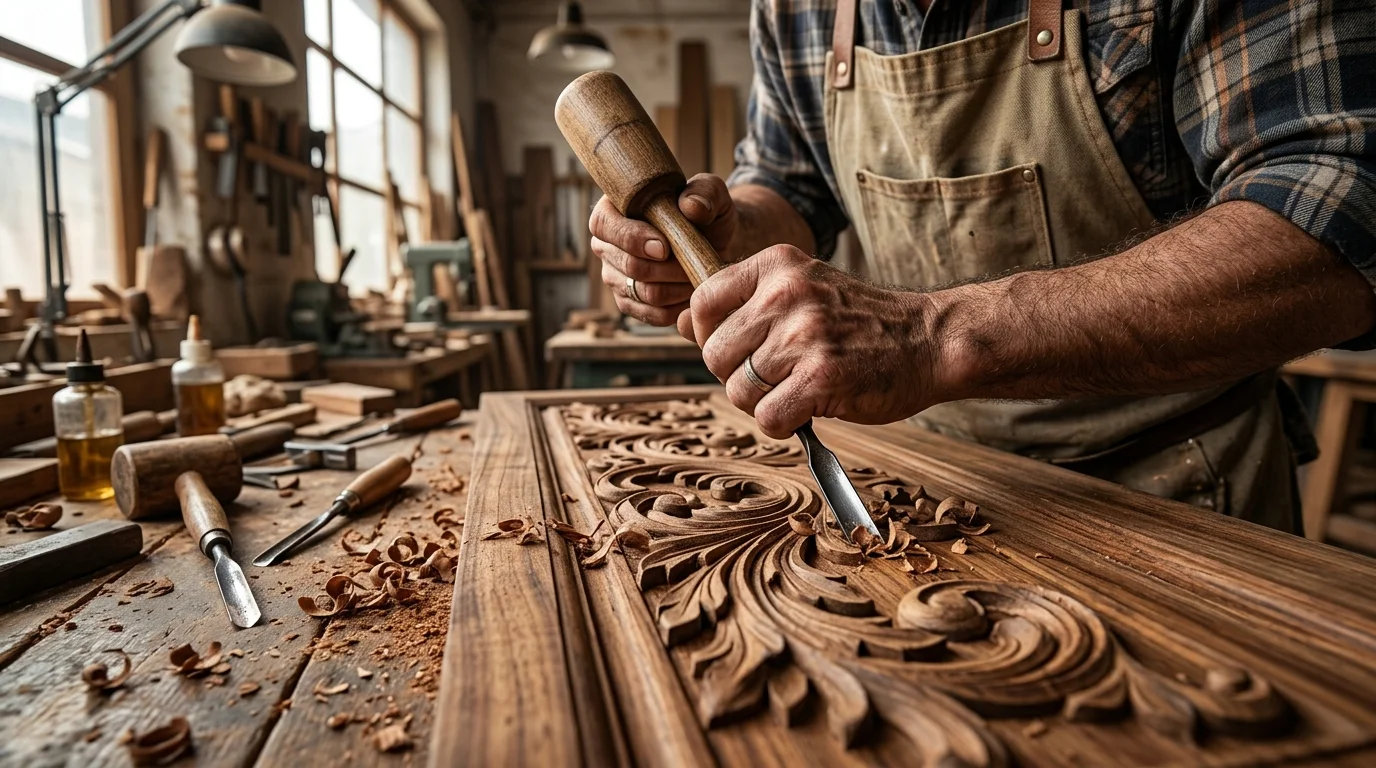
Carved wood doors turn an entrance into a true piece of architectural craft, but the artistic carving must always serve the functional requirements of the door. A motif that looks captivating on paper may become visually crowded around a lock set, disappear at a normal viewing distance, or remove too much structural calm from a narrow door leaf. The design process is therefore a careful exercise in translation: taking a reference image, sketch, or architectural motif and developing a refined pattern that suits the timber species, door dimensions, and everyday operation of custom wooden doors for your property.
Begin with Meaning, Scale, and Viewing Distance
Identify what visual element should be recognized first when approaching the entry: a structured geometric border, fluid floral movement, a prominent central emblem, or an all-over carved texture. Next, evaluate how the entrance will be viewed from multiple vantage points—including the street curb, covered porch, and interior entryway. While fine micro-detail rewards close personal inspection, the primary architectural shapes require sufficient scale and relief depth to remain legible from a distance.
When starting a project, provide comprehensive visual references to your master carver and clearly specify which design elements matter most. If your chosen motif carries cultural, familial, or historical symbolism, highlight the specific details that must remain unaltered. With this guidance, the craftsman can judiciously simplify secondary background patterns without compromising the core aesthetic intention.
Reserve Clear Space for Construction and Hardware
Carving depth, margin relief, and layout placement must strictly respect essential door components, including panel stiles, rail joints, glass insertion stops, mortise locks, handles, and decorative escutcheons. Executing deep relief carving too close to a narrow stile can compromise structural integrity, while an overly intricate pattern surrounding door handles can make fine hardware look like an afterthought. On double front doors, decide early whether the carved pattern should mirror symmetrically across the meeting stiles or read as one continuous, sweeping artwork across the combined leaves.
Furthermore, timber grain orientation and protective finish coatings dramatically influence the final appearance of carved wood doors. Deeply recessed relief carving catches dark shadows that heighten visual contrast, whereas a smooth, satin finish softens the carved lines for a subtle look. Physical wood samples, detailed CAD shop drawings, and pre-carving visual approvals ensure that the finished installation matches your exact expectations rather than relying solely on generic descriptive terms.
Designing Custom Carved Wood Doors for Architectural Character
Integrating custom carved wood doors into modern or traditional architecture requires harmonizing centuries-old hand craftsmanship with contemporary weather-sealing and structural engineering standards. Master artisans leverage historic techniques in woodcarving to sculpt dimensional relief patterns that continuously interact with shifting natural sunlight throughout the day. When specifying bespoke entryways, architects, interior designers, and building owners must account for seasonal humidity changes. Proper panel floating mechanisms and calibrated relief depths allow the natural timber to expand and contract freely across seasons without cracking or binding.
Selecting Timber and Finishes for Carved Wood Doors
Selecting the appropriate wood species is critical for creating durable, long-lasting carved wood doors that resist environmental wear. High-density, tight-grained hardwoods such as teak, mahogany, black walnut, and white oak offer superior dimensional stability and maintain razor-sharp edge definition under delicate chisel work. Conversely, overly soft or loose-grained wood species can tear, splinter, or create fuzzy edges when subjected to intricate deep relief carving. Applying high-performance exterior oils or marine-grade finishes protects vulnerable carved crevices against moisture infiltration and UV degradation while accentuating the wood’s rich grain structure.
Approve the Design in Stages for Quality Assurance
Establishing a structured, multi-stage approval workflow prevents misunderstandings and costly alterations during actual woodworking. A proven project sequence begins with initial motif selection and reference review, followed by full-scale layout drawings, verification of hardware clearance zones, agreement on relief carving depth, and final timber finish selection. Be sure to document which aspects are executed by hand, as subtle hand-chiseled variations contribute to the unique character of authentic artisan work. Our custom door design options guide offers comprehensive insights on combining custom carving with glass panels, iron grilles, and custom hardware assemblies.
To begin exploring visual concepts, browse our hand-carved door collection or view detailed examples such as the Vienna carved double front door with transom. For comprehensive technical specifications regarding timber selection, core construction, and exterior weather maintenance, visit our main wood front door pillar guide. When you are ready to bring your vision to life, submit your architectural plans, motif ideas, and opening dimensions directly through our custom door quote request.