There is no item in your cart


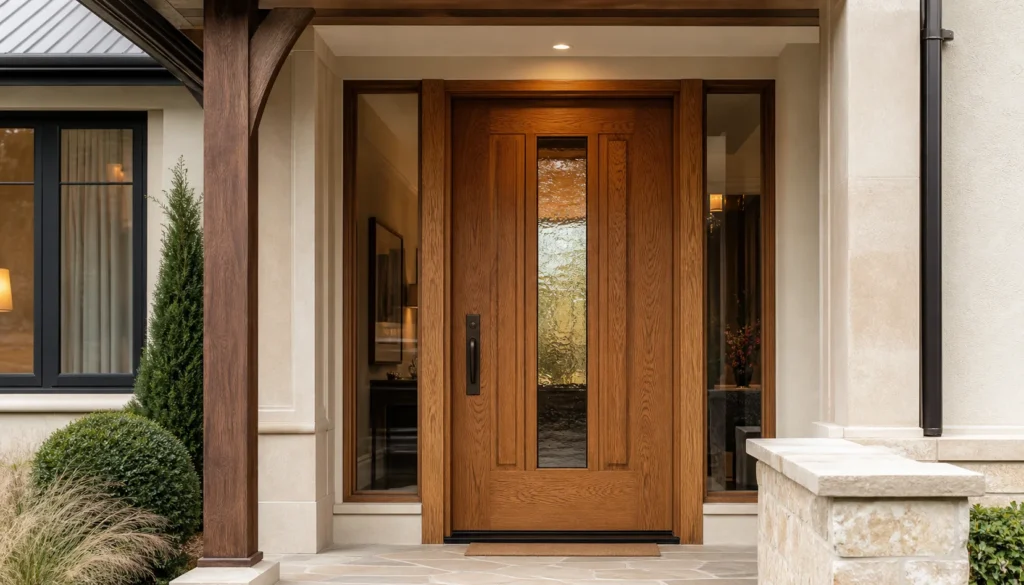
Rustic wood front doors are often chosen for their visible grain, tactile surfaces and sense of connection to a home. Rustic does not have to mean rough or casual. The strongest designs decide where the natural character leads and where the frame, glass, hardware and finish provide restraint.
Define the kind of rustic character you want
Reference images can point toward warm oak grain, a darker brown finish, hand-carved detail, a wider plank feeling or a traditional panel arrangement. Identify which qualities matter rather than describing everything as “rustic”. That prevents a door from combining unrelated details simply because they appear in separate photographs.
Make the entrance practical as well as expressive
Choose the opening configuration, swing, frame and threshold before adding decorative texture. Glass can bring daylight into a deep entry, while sidelights or a transom may preserve more solid timber in the operating leaves. Hardware should be comfortable and aligned with the rails, stiles or carving.
Exterior timber still needs an appropriate construction, finish and care plan. Discuss exposure, porch coverage, rain, sun and who will maintain the finish. The wood front door pillar guide and design options guide cover the broader sequence.
Use real examples as starting points
Browse the solid oak door collection and a reference such as the Rustic Vineyard front door. Then submit the opening, preferred grain or finish direction and any glass ideas through the custom door brief.
Rustic character should also be judged against the building materials around the entrance. Warm timber may sit comfortably with stone, brick or rendered walls, while a heavily distressed surface can compete with an already detailed facade. Compare the door at the distance from which it will normally be seen, not only in a close-up sample.
Where glass or carving is included, use one dominant gesture and let the rest of the door support it. Confirm grain direction, edge treatment, finish variation and the intended hardware before approving the layout. That approach keeps the result handcrafted without making the entrance visually uncertain.