There is no item in your cart

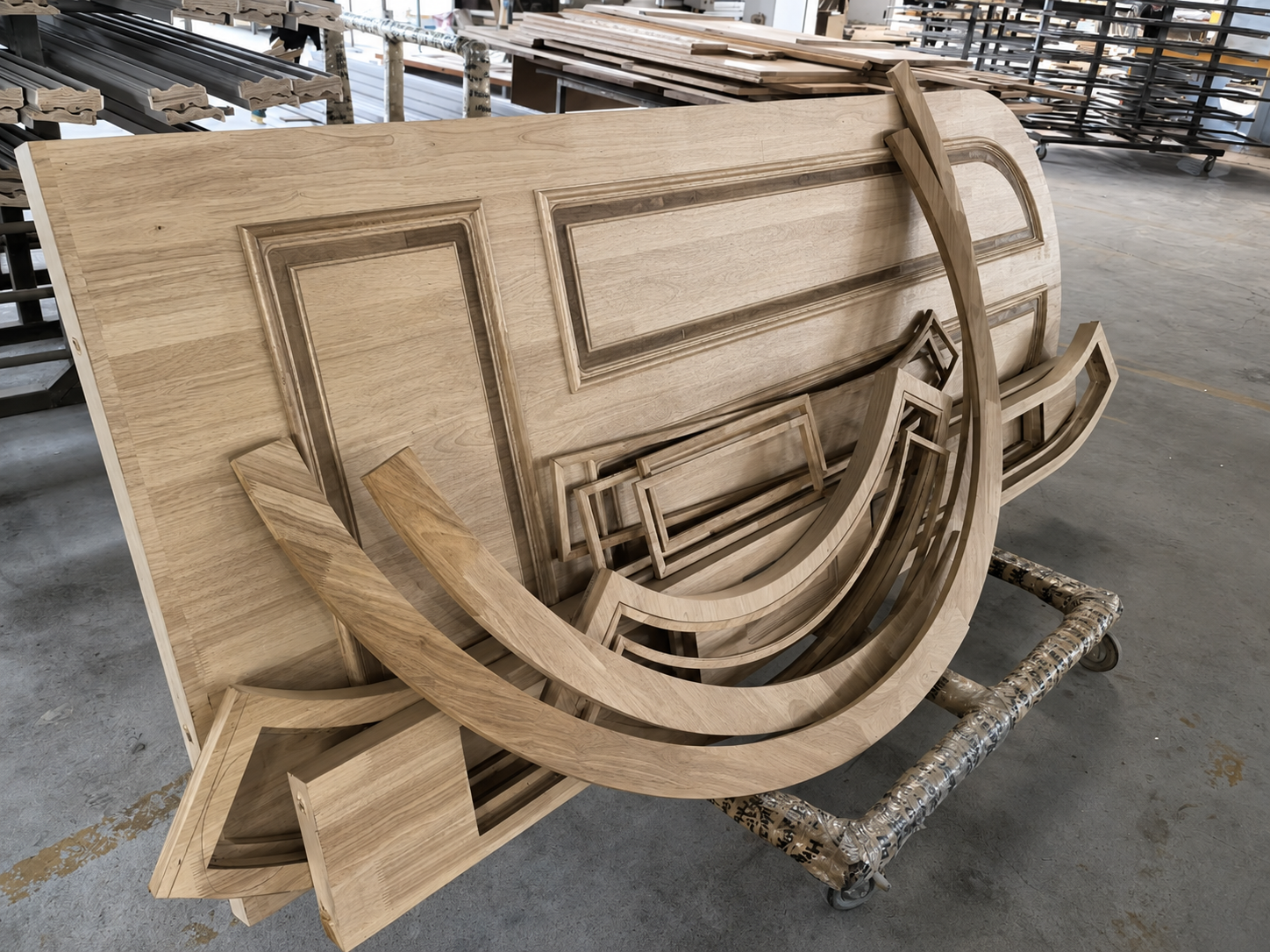
Custom door design choices are easier to navigate when the selection process moves from building architecture and opening configuration to decoration. The best custom door style is not simply the most detailed design. It is the one whose proportions, materials, glass, and finish belong with the building while meeting the practical needs of the opening.
Begin with the building, not a trend
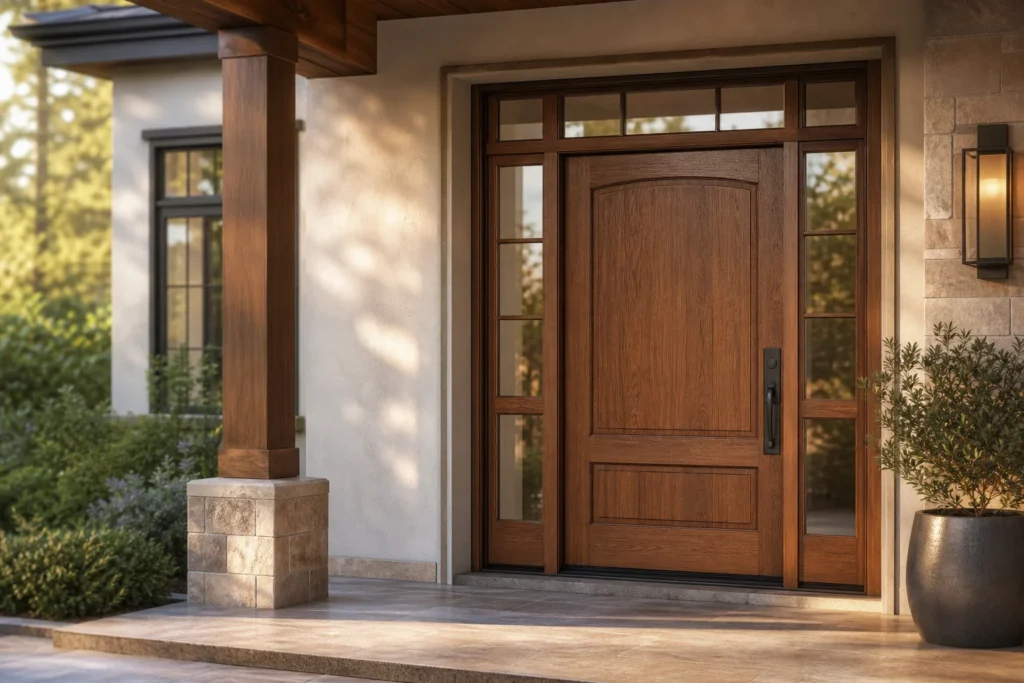
Photograph the facade straight on and note the strongest lines: roof pitch, window divisions, masonry courses, columns, and entry recess. A door can echo those lines or provide a controlled contrast. Saving examples is helpful, but each reference should be annotated with the specific feature you like. Aligning custom door design elements with existing architectural lines creates visual harmony.
“Modern”, “traditional”, and “rustic” are broad labels. Describe the actual elements: flat panels, vertical boards, raised panels, carved motifs, narrow glass, dark hardware, or a warm natural finish. To review woodworking standards, consult the woodworking joinery standards covering timber panel assembly and frame joinery.
Let the opening shape guide the composition
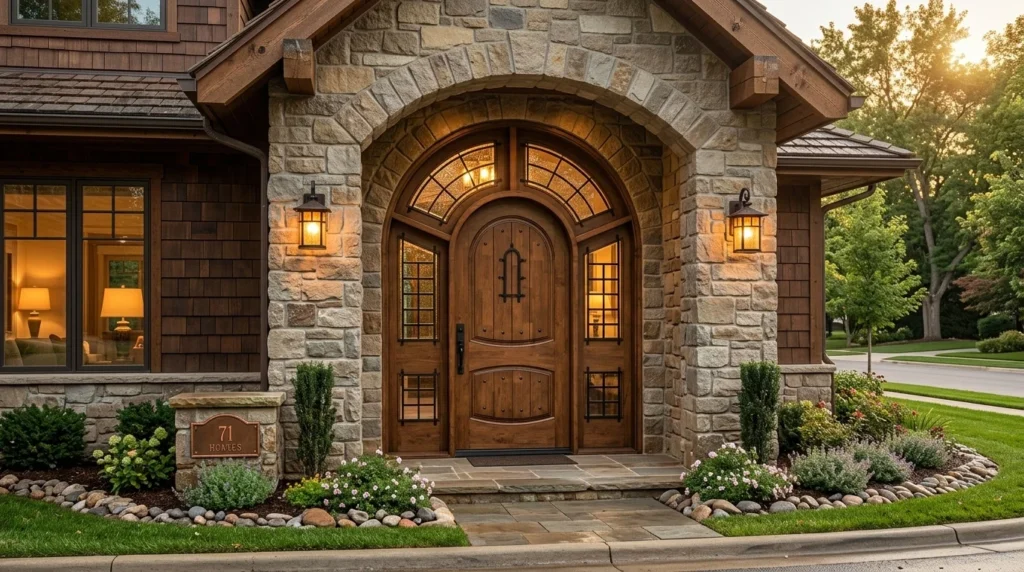
A tall narrow single door needs a different panel arrangement from a broad double entry. Sidelights add vertical lines. A transom adds a horizontal division. An arch creates a strong upper shape that may need calmer detailing below.
Browse our modern doors collection, arched doors catalog, and hand-carved doors collection as visual libraries. Shortlist configurations that resemble your opening dimensions and facade style.
Modern and restrained
A modern direction often uses simple panel geometry, limited ornament, and deliberate contrast between wood, glass, and hardware. Simplicity makes proportion and workmanship more visible. Confirm where joints, glass lines, and hardware will sit on the final size. A minimalist custom door design highlights organic timber grain textures.
Panelled and traditional
Panelled designs can relate well to established architecture. The number and shape of panels influence the perceived height and width. When resizing a reference design, ask for an elevation drawing so the panel rhythm can be reviewed before production.
Hand-carved as a focal point
Carving introduces motif, scale, depth, and shadow. Decide whether it should cover the door, form a border, or create one focal panel. Provide reference images, but expect the final artwork to be adapted to the actual proportions. Confirm the approval process before carving begins.
Use glass intentionally
Glass can make an entry lighter and more transparent. It can sit within the leaf, beside it as sidelights, or above it as a transom. Consider both daylight and privacy at night. Confirm available glass, safety specification, and performance for the project rather than relying on appearance alone.
Finish and hardware complete the composition
Finish changes the contrast of the grain and carved detail. Hardware introduces another material and scale. Collect finish and hardware references together so they can be reviewed as one palette. The image on a screen is not a reliable sample of final colour.
A practical selection worksheet
- Label the opening: exterior/interior, width, height, depth, and shape.
- Select the configuration: single, double, sidelights, transom, or combination.
- Choose three words for the desired character.
- Save two or three relevant door references.
- Mark essential features and optional features separately.
- List glass, privacy, finish, and hardware questions.
- Request a drawing or specification for review before approval.
Submit your completed worksheet through our custom door quote brief to collaborate directly with our master craftsmen.
Frequently asked questions
Should the front door match the windows exactly?
Not necessarily. Repeating one or two proportions, colours, or material cues can create cohesion without making every element identical.
Can a detailed custom door design work on a small door?
Possibly, but the motif and panel layout must be simplified or scaled carefully. Review an elevation drawing at the actual proportions.
How many reference images should I send?
Two or three well-annotated references are usually more useful than a large unfiltered gallery.